Just How Social Link Improves Life in Memory Care
Business Name: BeeHive Homes of Alamogordo
Address: 1106 San Cristo St, Alamogordo, NM 88310
Phone: (575) 215-3900
BeeHive Homes of Alamogordo
Beehive Homes assisted living care is ideal for those who value their independence but require help with some of the activities of daily living. Residents enjoy 24-hour support, private bedrooms with baths, medication monitoring, home-cooked meals, housekeeping and laundry services, social activities and outings, and daily physical and mental exercise opportunities. Beehive Homes memory care services accommodates the growing number of seniors affected by memory loss and dementia. Beehive Homes offers respite (short-term) care for your loved one should the need arise. Whether help is needed after a surgery or illness, for vacation coverage, or just a break from the routine, respite care provides you peace of mind for any length of stay.
1106 San Cristo St, Alamogordo, NM 88310
Business Hours
Social link changes the feel of a day in memory care more than numerous households anticipate. A resident may not remember what was offered for lunch or whether it drizzled after morning meal, however they commonly bear in mind exactly how they felt sitting with an acquainted face, listening to a favored tune, or poking fun at a small joke at the table. Those moments matter. They steady an individual that may already really feel disoriented, and they produce a sense of belonging that can be hard to produce any kind of other way.
Families searching for memory care near me are typically concentrated on safety, supervision, and medical support. Those things issue, certainly. However the most effective memory care communities recognize that a safe environment is only component of the picture. Individuals coping with dementia or various other amnesia still require companionship, conversation, touchpoints of regular, and chances to be acknowledged as the people they are. That social textile is not added. It is a core component of quality elder care.
Why seclusion is so hard on people with memory loss
Memory loss can make the world feel uncertain. An individual might not bear in mind where they are, that simply left the space, or why the hallway looks unknown today. That unpredictability can result in withdrawal. Some locals stop starting discussion because they can not maintain. Others end up being nervous in groups and pick silence because it feels much safer than attempting and failing.
When social contact hands over, the impacts turn up swiftly. Dishes end up being quieter. Sleep can become a lot more restless. Someone who once took pleasure in talking might seem level or distant. Family members in some cases think this is simply the illness progressing, but loneliness commonly aggravates the experience. The brain and the nerve system react to human connection, even when memory itself is changing. A warm interaction can reduce tension, disrupt repeated concern, and give the individual a factor to stay oriented to the day.
I have seen homeowners who barely spoke in the morning brighten within minutes when the best personnel sat down and asked about an old hobby. Not every communication becomes a development, and that is fine. The point is uniformity. Repeated small minutes of link accumulate, particularly in memory care where trust is constructed slowly.
Social link offers framework to the day
An individual with amnesia usually does better when the day really feels predictable. Social contact helps produce that predictability. Breakfast with the same tablemates, a morning greeting from the same caretaker, or a standing afternoon group can become supports. The resident might not consciously track the schedule the method a younger adult would, however the body discovers patterns. Acquainted individuals, acquainted voices, and familiar routines lower friction.
This is one factor numerous neighborhoods develop their memory care programs around shared experiences rather than lengthy stretches of unstructured time. A brief singalong, a horticulture circle, or a folding-towels job done with each other can give more than home entertainment. It produces a rhythm. Citizens recognize that something positive will happen, and that expectation can lower agitation.
That rhythm issues especially in the late mid-day and very early night, when many people with dementia become a lot more uneasy. A calm social activity before that tough window can make a visible difference. It does not need to be intricate. A small group taking a look at picture books, a cup of tea with soft songs, or a walk with a team member around the courtyard can change the tone of the entire evening.
Connection protects dignity
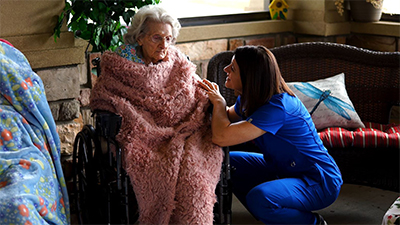
One of one of the most excruciating aspects of amnesia is just how conveniently a person can be discussed, hurried, or treated like a job rather than a grownup. Social link, when done well, brings back self-respect. It claims, "You still matter below. Your preferences still count."
That starts with basic behaviors. Personnel who welcome homeowners by name. Care partners that pause enough time to listen to an answer. Neighbors at the table who understand that a slower response does not indicate the individual has absolutely nothing to state. These are small acts, yet they bring weight.
Families often observe that a parent in memory care seems more participating with individuals who make the effort to build relationship. That is not shocking. Participation improves when a person feels respected. A resident who trust funds the staff is much less most likely to resist showering, much less likely to come to be distressed at medicine time, and more probable to engage in activities. Excellent connections commonly lower the demand for coaxing.
This is where senior care comes to be more than a service. It ends up being a relationship-based environment. In strong neighborhoods, care preparation includes social practices, not just clinical requirements. Who does this resident sit with? What time of day do they open up? Which subjects light them up? These information can be equally as vital as diet or mobility notes.
Familiar voices and faces issue more than individuals realize
Memory loss can make new info tough to hold on to, yet emotional memory often stays stronger. A resident might not bear in mind the name of the aide that helped them clothe today, yet still kick back when that aide walks in since the face feels risk-free. In time, familiar voices become part of the resident's internal sense of comfort.
This is one reason continuity of personnel is so valuable in memory care. Frequent turnover can unsettle homeowners, even when the brand-new staff are skilled and kind. A community that keeps assignments constant, or a minimum of tries to preserve routine get in touch with, is often offering locals a significant gift. The individual who understands exactly how someone takes coffee, whether they like a handshake or a wave, and what track obtains a smile is doing more than offering solution. They are helping protect identity.
Families visiting a community ought to take note of how personnel connect with citizens who are not in the center of a polished tour. Do personnel talk to simplicity, or do they seem scripted? Do citizens appear to recognize them? Exists giggling, or effectiveness? Those details tell you a great deal about the social climate.
Group activities work best when they are really social
Not every arranged event produces link. Some activities look great on paper however leave homeowners bored or overloaded. For individuals living with cognitive adjustments, social activities need to really feel manageable, welcoming, and significant. A crowded area with a loud video game might assist some homeowners and unsettle others. A community that recognizes memory care will certainly supply a range of engagement styles, not simply one-size-fits-all programming.
The ideal activities typically involve participation that feels all-natural. A singalong can work due to the fact that the melody brings memory even when words fail. Cooking cookies can work due to the fact that it offers the hands something to do while conversation occurs around the task. Arranging vintage postcards, arranging blossoms, or speaking about a picture album can welcome involvement without requiring best recall.
There is a distinction between being captivated and being included. Citizens in top quality memory care are not simply watching a show. They become part of something. Also a person who says extremely little may still be emotionally involved, nodding along, tapping a foot, or smiling at the right moment. Staff who comprehend this do not measure success only by the amount of individuals spoke up loud.
The function of small teams and individually moments
Large events are not always the answer. Lots of citizens do much better in small groups or one-on-one settings, specifically when they are early in their diagnosis or easily overstimulated. A solitary conversation while strolling the hallway might calm a person more effectively than an area full of chairs and announcements.
This is where senior living near me searches can become extra nuanced. Households are not just looking for a structure. They are seeking a society that can adapt to the person. Some homeowners thrive in a table of five with a lot of chatter. Others favor resting next to one buddy while viewing birds outside. Good memory care recognizes these distinctions and makes room for them.
One resident I think of typically was a retired technician who hardly ever joined team craft projects. He would certainly, nonetheless, light up when a team member handed him a wrench to examine or asked him to discuss just how something worked. He was not being difficult. He was informing everyone, in his very own method, what kind of social connection really felt actual to him. The very best neighborhoods pay attention for that.
Family visits still matter, even when memory is uneven
When a loved one gets in memory care, family members occasionally fret that visits will certainly be confusing or disturbing. That can happen, specifically at first, however regular contact typically aids more than it injures. Also when a resident can not call a child or recall a grandchild's recent job modification, the psychological signal of a visit still lands.
Families do not need to compel discussion. Peaceful visibility can be enough. Checking out old images, sharing a snack, listening to music, or taking a brief walk might produce a calmer visit than attempting to load every min with questions. The objective is not to check memory. The goal is to connect.
It is likewise worth stating that household visits function best when they straighten with the resident's energy. Some individuals are sharpest in the morning. Others are a lot more unwinded after lunch. A good memory care team can assist families pick far better home windows for seeing, which can lower irritation on both sides.
When families live away, or when job and caregiving make normal visits hard, communities that use video telephone calls or assist coordinate check-ins can reduce a lot of regret. Technology is not a substitute for human closeness, but it can help receive it.
Social link supports habits in useful ways
Families typically ask why one resident appears calmer in one setup and more flustered in an additional. Social link becomes part of the response. People with dementia usually reveal discomfort with behavior since words no longer come conveniently. Dullness, concern, isolation, and overstimulation can all appear like uneasyness or resistance.
A resident that feels understood is often easier to redirect. If a caregiver has taken the time to construct depend on, then a cue like "allow's most likely to lunch with each other" lands differently than a cool guideline. Also, a resident that has normal possibilities to talk, relocate, and belong may be much less likely to stray just from anxious energy.

That does not mean social communication resolves whatever. Pain, medication concerns, and condition progression still issue. Yet communities that purchase social life usually see fewer avoidable flashpoints. A person with a full psychological day tends to be less torn than someone who has invested hours waiting alone.

What great memory care resembles from a social standpoint
Not every area talks openly concerning link, yet the good ones make it easy to see. Homeowners are not parked before a tv throughout the day. Team are not moving with meals like a production line. There is conversation in the hallways, and it appears patient as opposed to hurried. Individuals recognize each other's names. There is evidence of common life, not just supervision.
If you are contrasting elder care alternatives, look very closely at the environment throughout a normal hour, not simply throughout the tour. Notice whether personnel kneel to make eye contact. Notice whether locals seem secure near one another. Notice whether there are all-natural minutes of laughter, not staged ones. An area that fosters social connection will normally really feel warmer, much less clean and sterile, and more alive.
A practical inquiry to ask is exactly how the area matches homeowners with activities or friends. Some places depend on broad routines. Better ones learn individual choices and readjust. They could know that resident comes to be distressed in sound and requires a silent breakfast table, while another expands lonely without a group and must be seated near a talkative peer. That kind of focus takes work, yet it transforms daily life.
How families can motivate link after a move
The first few weeks in memory care can really feel odd, even when the action was required and meticulously prepared. Social connection throughout that transition can soften the edges. Family members can assist by bringing acquainted objects, labeling photos, and sharing basic life tales with team. The more a team understands about the individual's history, the better they can make intros feel personal.
A few sensible routines usually aid:
Bring photos that prompt very easy conversation, not difficult quizzes. An image of a fishing trip or a wedding event can open up a memory lane without requiring perfect recall.
Share preferred subjects, tunes, foods, and old routines with the care group. Details such as a recommended going to bed snack or a lifelong early morning coffee habit can make a resident feel much more like themselves.
Encourage repeat call with a few consistent team member. Familiarity constructs convenience much faster than rotating faces.
These are not grand treatments. They are straightforward, repeatable ways to help a person clear up right into senior living near me with even more self-confidence and less fear.
Social connection assists caretakers too
It is very easy to concentrate only on the resident, but social connection improves life for staff and family caretakers also. A neighborhood where residents recognize each various other and staff recognize homeowners has a tendency to run even more smoothly. Less interactions are purely transactional. Caregivers get more feedback, even more depend on, and more minutes that advise them why the job matters.
For family caregivers who make use of respite care, this is particularly vital. Understanding that your loved one is not just secure however socially involved can lower the continuous concern that comes with going back, even quickly. A respite stay is more reassuring when you can picture your parent resting with others at lunch, joining a brief walk, or chuckling with an aide who knows their preferred baseball team.
That type of confidence issues. It is much easier to relax when you recognize your loved one is not spending the day alone in a chair.
The human component is not optional
It is appealing to consider memory care as generally a response to assisted living alamogordo nm medical requirement. In truth, it is likewise a feedback to human need. Individuals do not stop needing friendship, acknowledgment, and belonging since they have dementia. If anything, those demands come to be sharper when memory is unstable and the world feels harder to read.
Social link provides citizens a reason to get to outside. It decreases worry, supports regular, and maintains identity from narrowing too far. It can make dishes simpler, mid-days calmer, and changes much less unpleasant. It does not heal memory loss, and it should never be oversold as a magic repair. However, for many people, it alters the structure of life in manner ins which are deeply real.
When households examine memory care, they are important to look beyond tidiness, staffing ratios, and the appearance of the dining-room. Those points issue. Yet the much deeper concern is this: do people right here appear to belong to each other? If the answer is yes, the neighborhood is doing something crucial. It is offering residents not just care, but link. Which can make all the difference.
BeeHive Homes of Alamogordo provides assisted living care
BeeHive Homes of Alamogordo provides memory care services
BeeHive Homes of Alamogordo provides respite care services
BeeHive Homes of Alamogordo supports assistance with bathing and grooming
BeeHive Homes of Alamogordo offers private bedrooms with private bathrooms
BeeHive Homes of Alamogordo provides medication monitoring and documentation
BeeHive Homes of Alamogordo serves dietitian-approved meals
BeeHive Homes of Alamogordo provides housekeeping services
BeeHive Homes of Alamogordo provides laundry services
BeeHive Homes of Alamogordo offers community dining and social engagement activities
BeeHive Homes of Alamogordo features life enrichment activities
BeeHive Homes of Alamogordo supports personal care assistance during meals and daily routines
BeeHive Homes of Alamogordo promotes frequent physical and mental exercise opportunities
BeeHive Homes of Alamogordo provides a home-like residential environment
BeeHive Homes of Alamogordo creates customized care plans as residents’ needs change
BeeHive Homes of Alamogordo assesses individual resident care needs
BeeHive Homes of Alamogordo accepts private pay and long-term care insurance
BeeHive Homes of Alamogordo assists qualified veterans with Aid and Attendance benefits
BeeHive Homes of Alamogordo encourages meaningful resident-to-staff relationships
BeeHive Homes of Alamogordo delivers compassionate, attentive senior care focused on dignity and comfort
BeeHive Homes of Alamogordo has a phone number of (575) 215-3900
BeeHive Homes of Alamogordo has an address of 1106 San Cristo St, Alamogordo, NM 88310
BeeHive Homes of Alamogordo has a website https://beehivehomes.com/locations/alamogordo/
BeeHive Homes of Alamogordo has Google Maps listing https://maps.app.goo.gl/ADjJ88EoCTadK58t5
BeeHive Homes of Alamogordo has Instagram page https://www.instagram.com/beehivealamogordo/
BeeHive Homes of Alamogordo has an YouTube page https://www.youtube.com/@WelcomeHomeBeeHiveHomes
BeeHive Homes of Alamogordo won Top Assisted Living Homes 2025
BeeHive Homes of Alamogordo earned Best Customer Service Award 2024
BeeHive Homes of Alamogordo placed 1st for Senior Living Communities 2025
People Also Ask about BeeHive Homes of Alamogordo
What is BeeHive Homes of Alamogordo Living monthly room rate?
The rate depends on the level of care that is needed. We do a pre-admission evaluation for each resident to determine the level of care needed. The monthly rate is based on this evaluation. There are no hidden costs or fees
Can residents stay in BeeHive Homes until the end of their life?
Usually yes. There are exceptions, such as when there are safety issues with the resident, or they need 24 hour skilled nursing services
Do we have a nurse on staff?
No, but each BeeHive Home has a consulting Nurse available 24 – 7. if nursing services are needed, a doctor can order home health to come into the home
What are BeeHive Homes’ visiting hours?
Visiting hours are adjusted to accommodate the families and the resident’s needs… just not too early or too late
Do we have couple’s rooms available?
Yes, each home has rooms designed to accommodate couples. Please ask about the availability of these rooms
Where is BeeHive Homes of Alamogordo located?
BeeHive Homes of Alamogordo is conveniently located at 1106 San Cristo St, Alamogordo, NM 88310. You can easily find directions on Google Maps or call at (575) 215-3900 Monday through Sunday 9:00am to 5:00pm
How can I contact BeeHive Homes of Alamogordo?
You can contact BeeHive Homes of Alamogordo by phone at: (575) 215-3900, visit their website at https://beehivehomes.com/locations/alamogordo/ or connect on social media via Instagram Facebook or YouTube
Alameda Park Zoo provides a relaxing and engaging outing where residents in assisted living, memory care, senior care, and elderly care can enjoy nature and wildlife with family or caregivers during meaningful respite care visits.